


Mapledale Country Club (1926-1929)
A Pioneer in the History of Black Golf


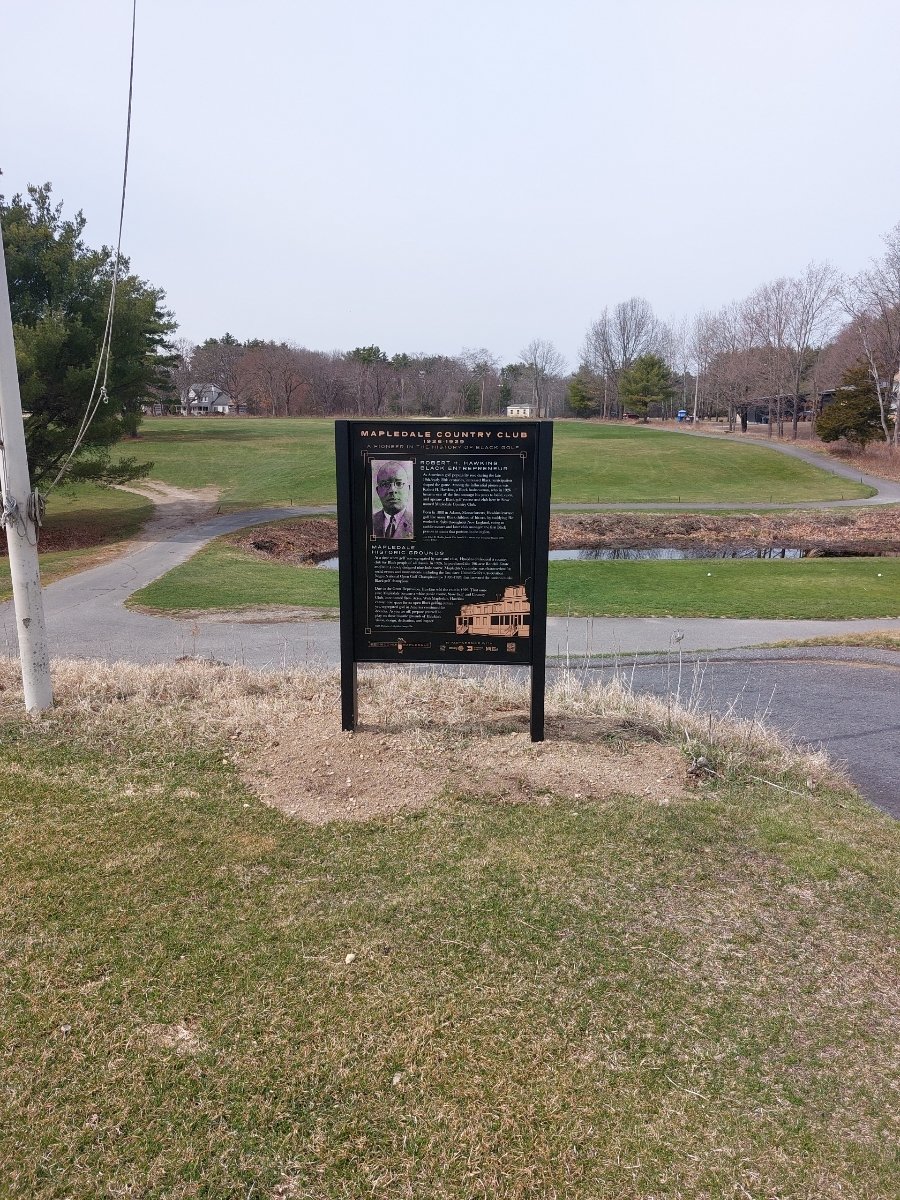
As American golf popularity rose during the late 19th/early 20th centuries, increased Black participation shaped the game. Among the influential pioneers was Robert H. Hawkins, a Black businessman and golfer, who in 1926 became one of the first amongst his peers to build, open, and operate a Black golf course and country club. His club, Mapledale Country Club, was the first course of this kind in Massachusetts, and one of the earliest Black-owned, operated, and designed golf courses in the country.
Born in 1888 in Adams, Massachusetts, Hawkins learned golf like many Black children of his era, by caddying. He worked at clubs throughout New England, rising to caddie master and later club manager at the Sandy Burr Country Club in Wayland, the first Black person to attain that position in New England.
At a time when golf was segregated by race and class, Hawkins envisioned a country club for Black people of all classes. In 1926, he purchased the 196-acre Randall Estate in Stow, Massachusetts and built a newly designed nine-hole course to serve as the centerpiece of the new Mapledale Country Club.
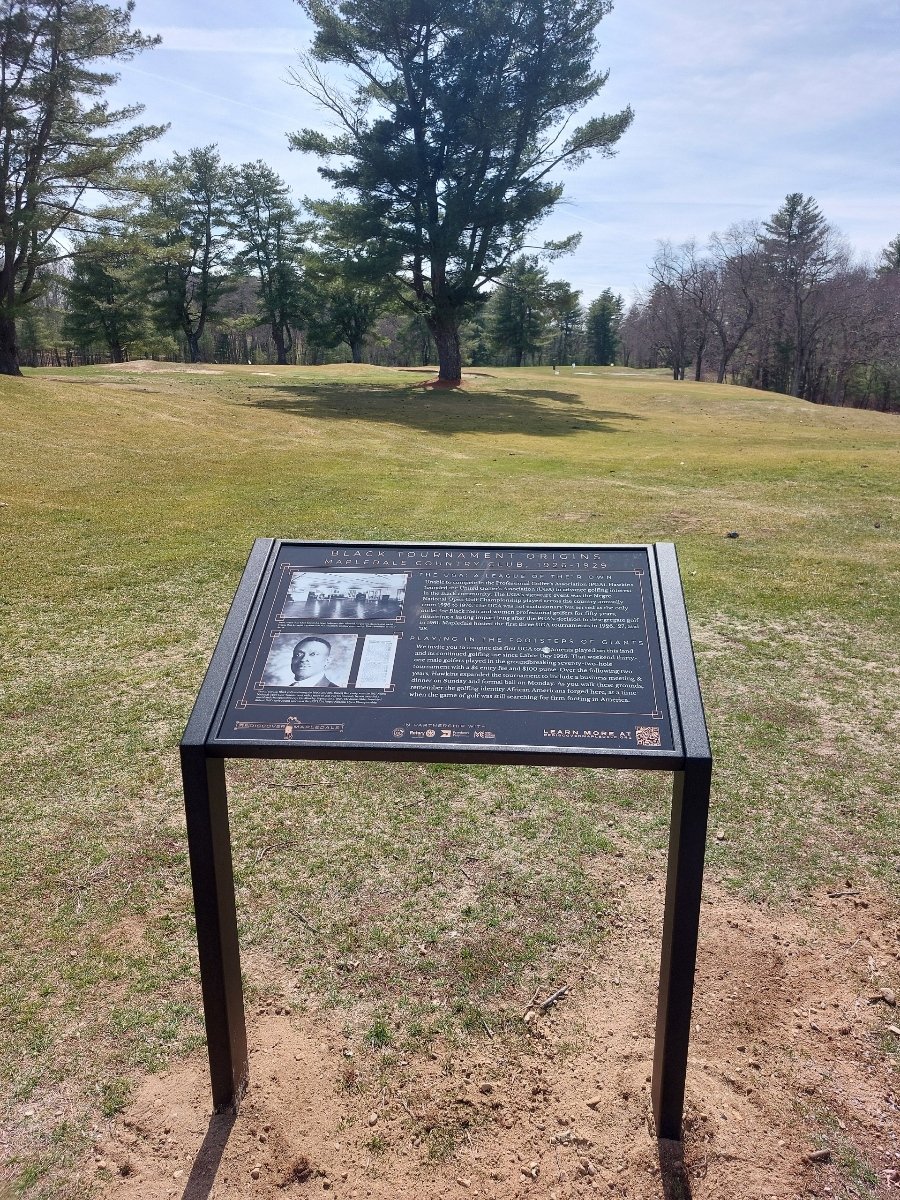
Mapledale’s calendar was characterized by social events and tournaments. It also served as a national hub for Black golfers at the highest levels. It was at Mapledale that Hawkins rallied his peers to form the United Golfer’s Association (UGA) in 1926, Black golf’s response to the segregated PGA. Mapledale would serve as the playing grounds for the UGA’s first three Negro National Open Golf Championships (1926-1928), which crowned the nation’s first Black golf champions.
The Great Depression hit Mapledale hard, and Hawkins sold the club in 1929. That same year, Mapledale became a white public course, Stow Golf and Country Club, later named Stow Acres. Segregated golf in America continued for decades. With Mapledale, Hawkins carved new space for an open Black golfing culture that rooted and expanded nationally.
The land that used to be Mapledale, and the first nine holes that Hawkins designed there, are still operational as a golf course at Stow Acres. The land has been preserved by the Town of Stow under a Conservation Restriction to ensure its continued historical use as a golf course. All are welcome to golf at Stow Acres, or explore the town-maintained Mapledale Walking Trail around the course. In 2024, Rediscover Mapledale installed interpretive signs along the course to share the site’s history with all visitors.

Wayfinding Stations
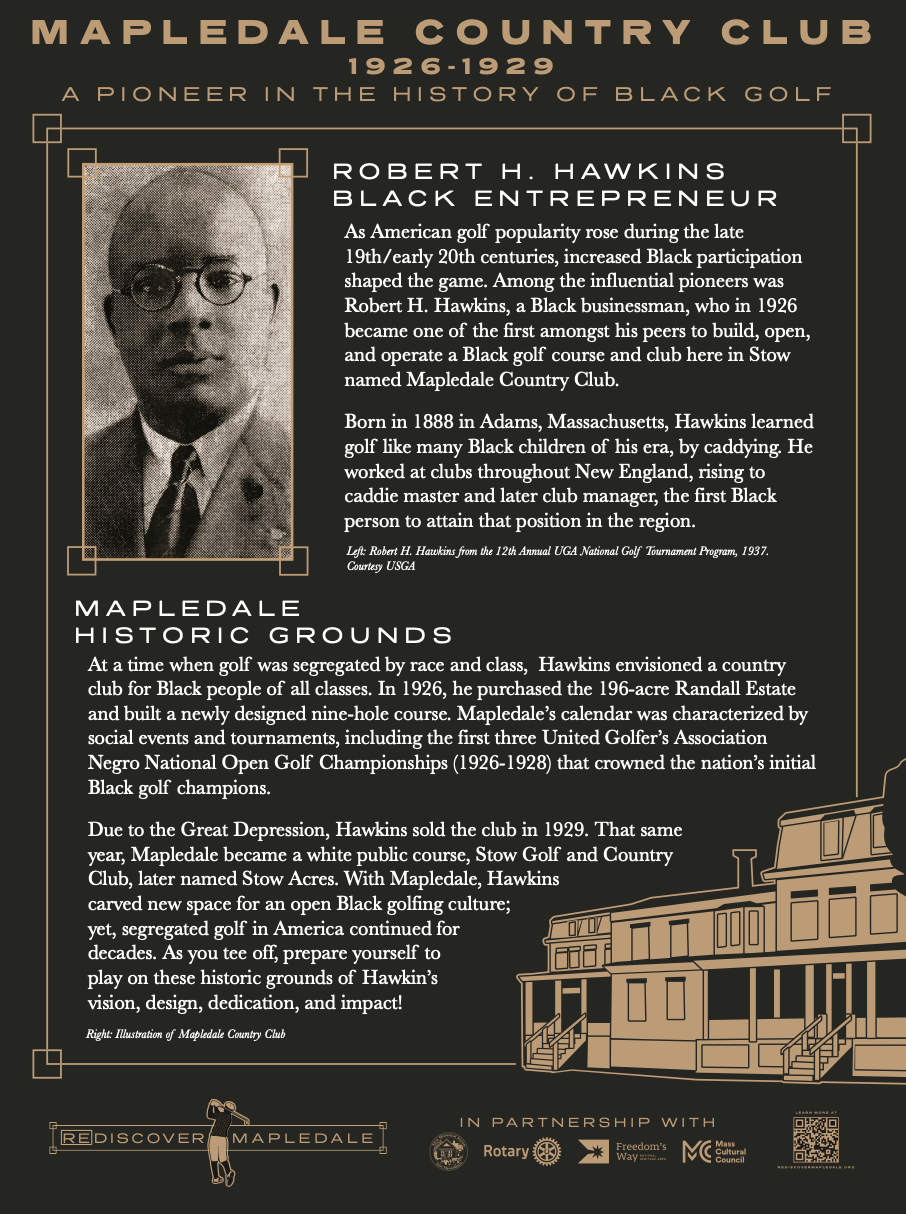
Sign #1
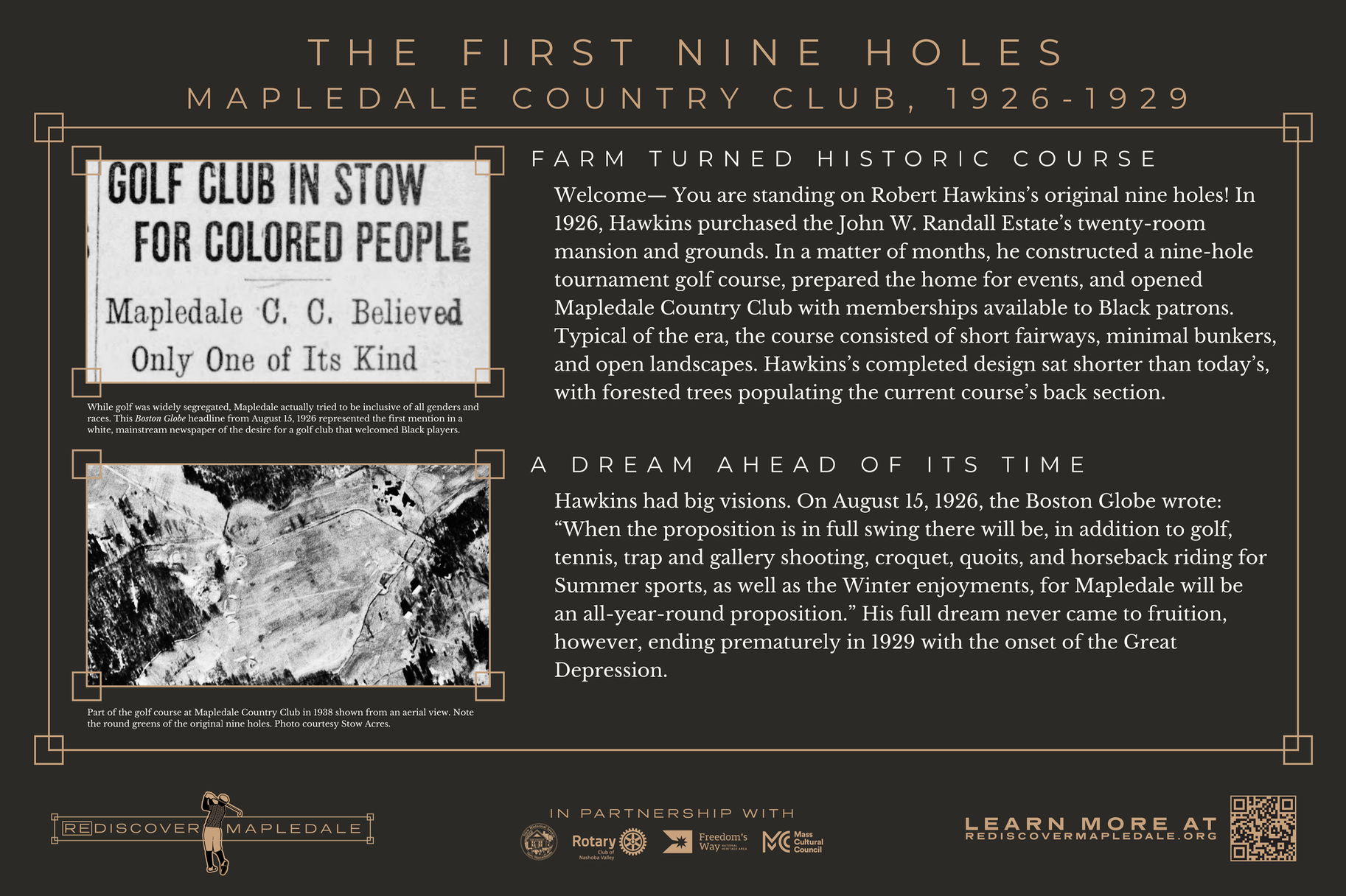
Sign #2
Background:
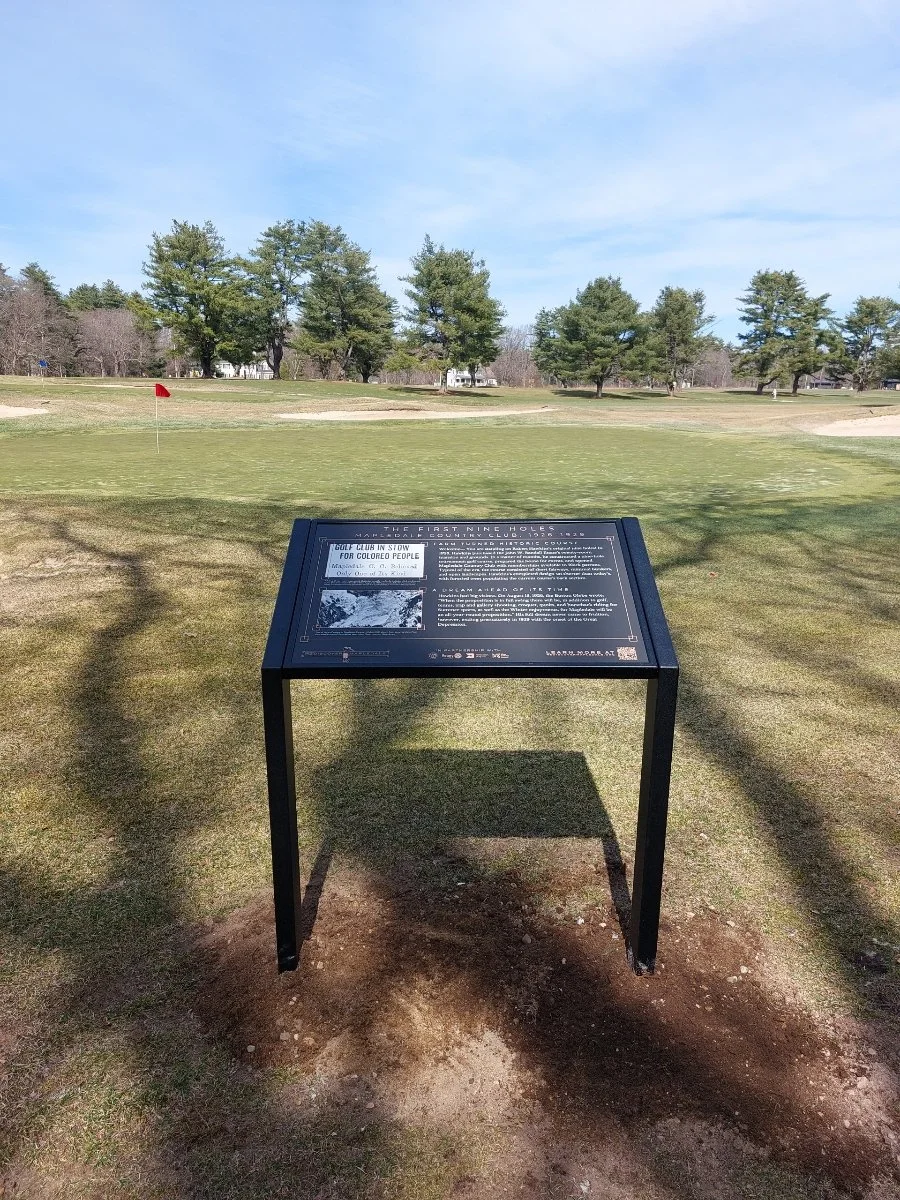
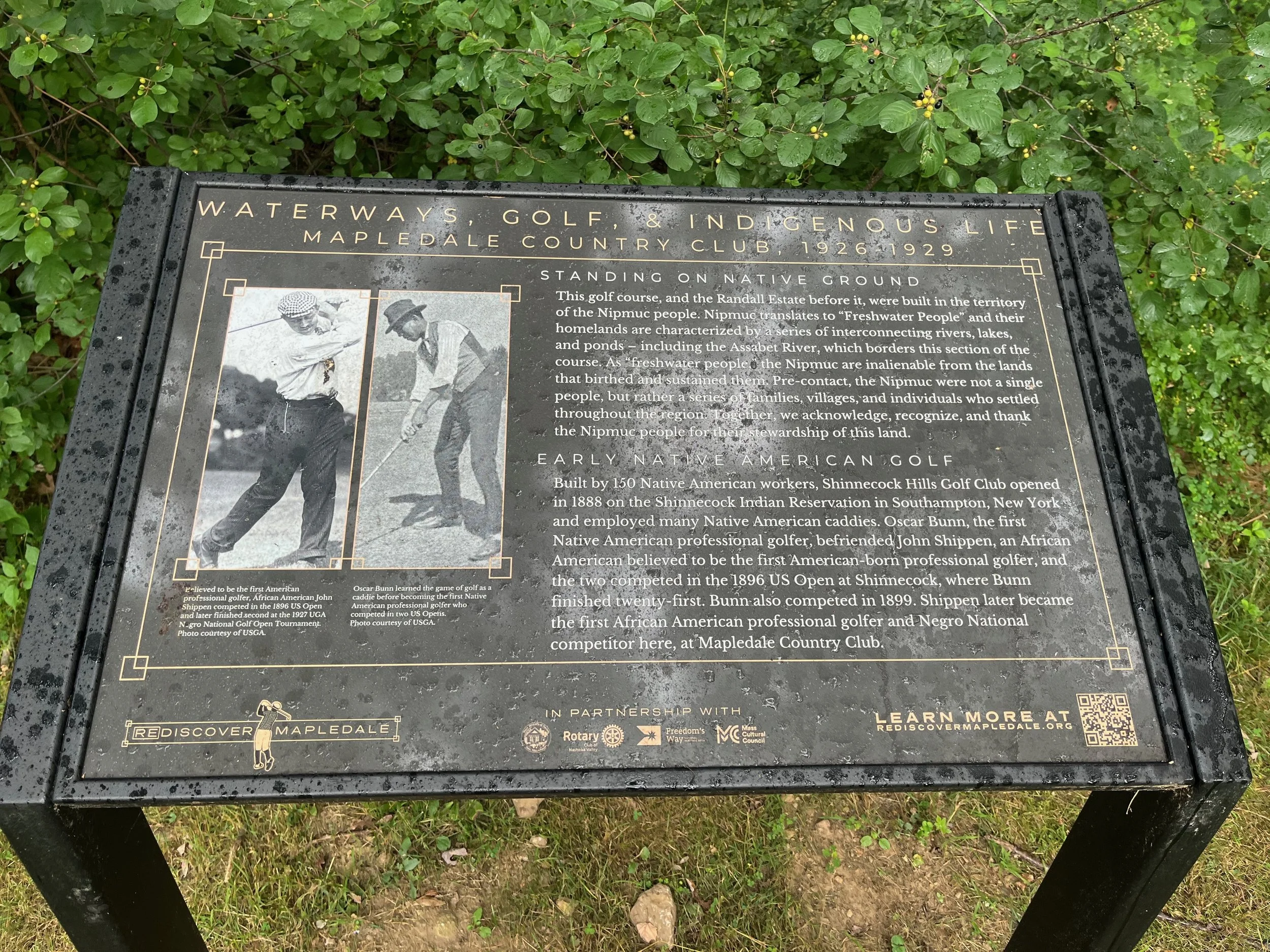
In 2024, the Rediscover Mapledale Board took on Phase II of their project goals, to research and curate 4 interpretive panels to establish on-site interpretation via interpretive wayfinding stations at the former Mapledale Country Club, now Stow Acres Country Club.
The land that comprises the south course at Stow Acres is under a conservation restriction, guaranteeing the ongoing preservation of this historic site.
Wayfinding encompasses all of the ways in which people orient themselves in physical space and navigate from place to place. These stations will allow visitors to the walking trail around Stow Acres to orient themselves both in space and in time, as they discover the history of the land that they are walking.
Visitors and golfers alike will learn the story of the groundbreaking Mapledale Country Club, the first recorded 9-Hole Golf Club owned and operated by an African American in Massachusetts, as well as the story of the Indigenous people whose lives and culture are shaped by the waterway that borders it (the Assabet River).
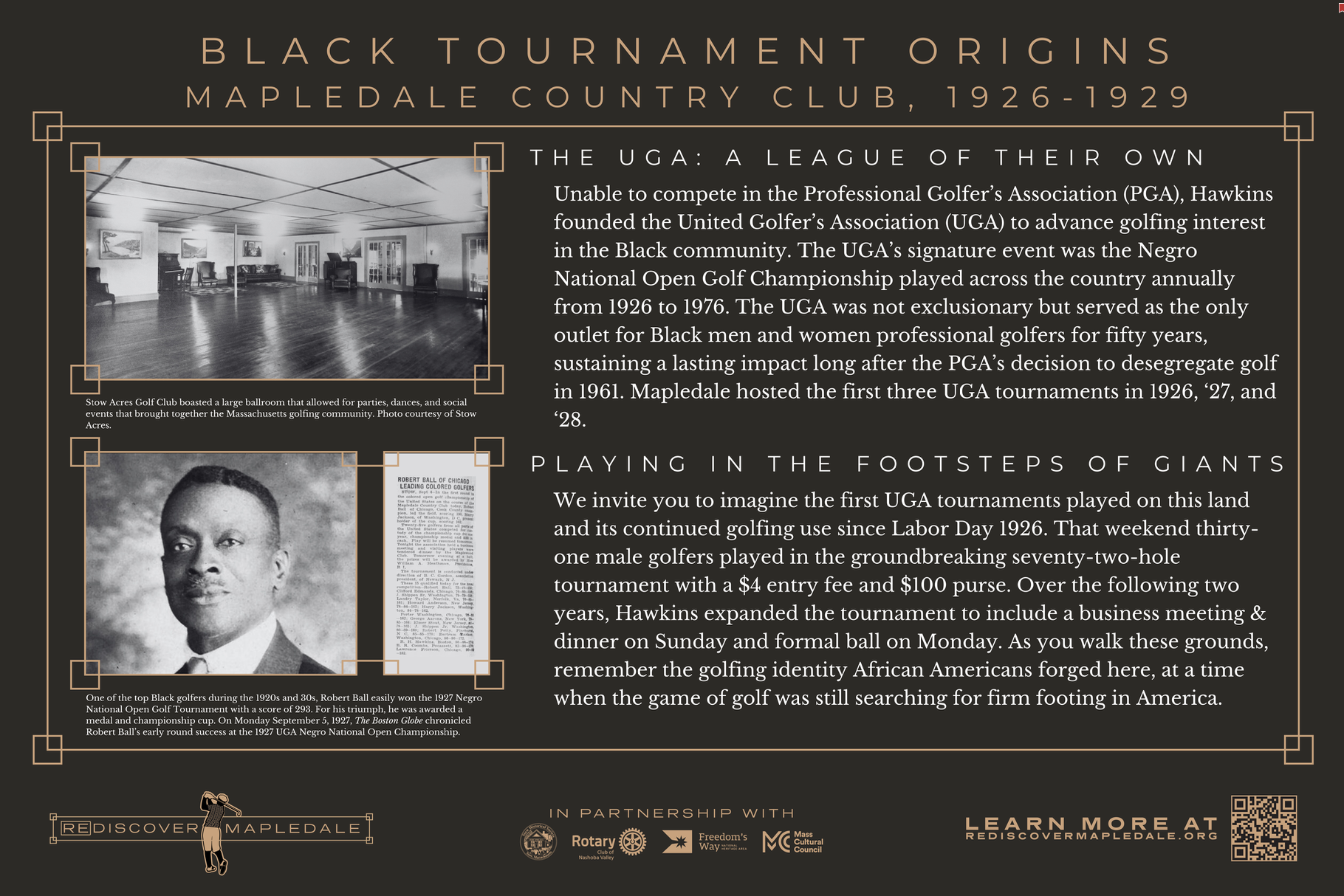
Sign #3
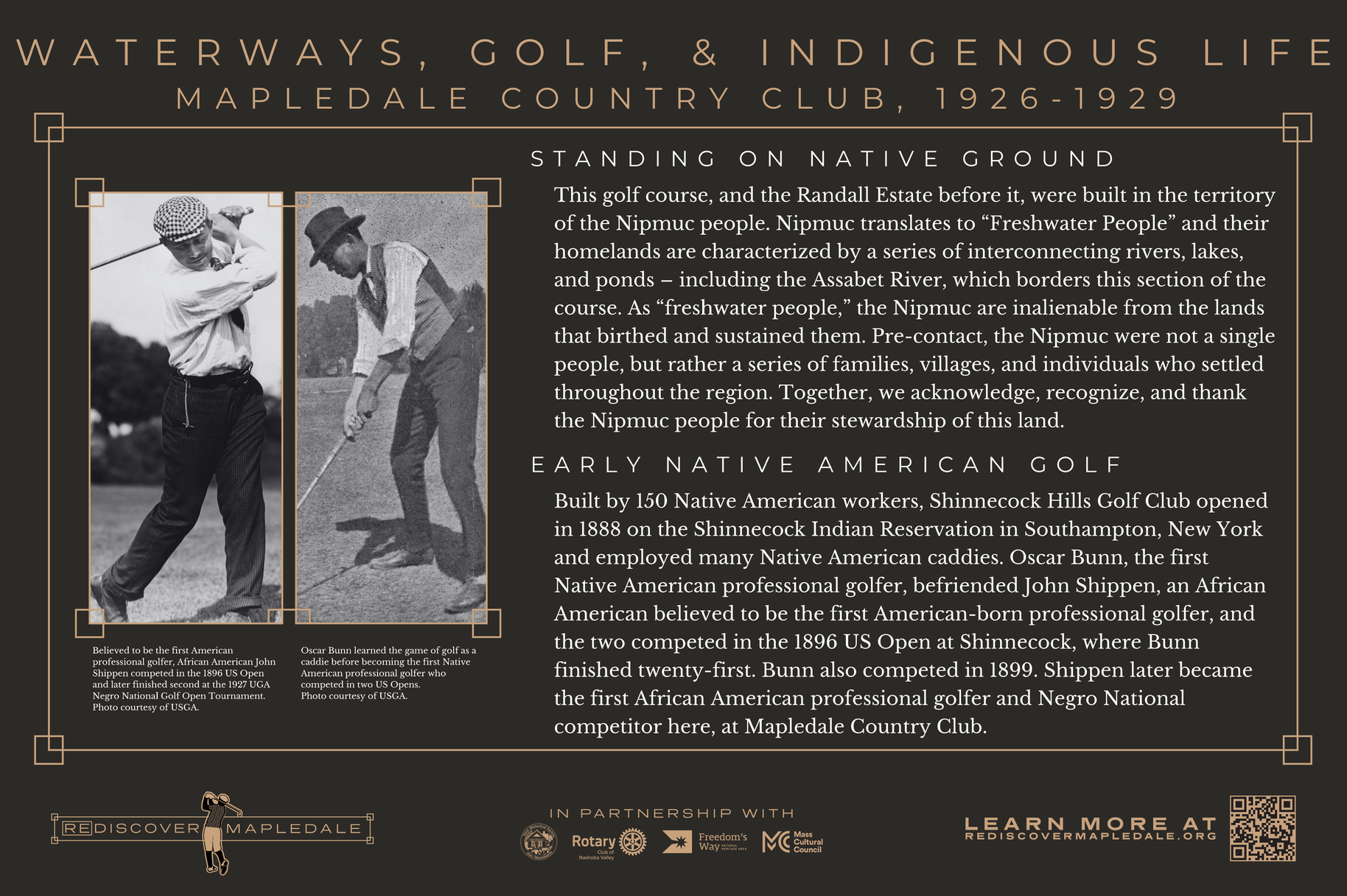
Installed
Sign #4
Want to know more?
In 2023, Rediscover Mapledale contracted with Interpreting Sports to write a short monograph on Robert H. Hawkins and Mapledale Country Club.